
Helping Councils Understand Local Mobile Coverage and Service Experience
Nettot helps councils and LGAs move from complaints and assumptions to structured telecom evidence.
The challenge
Local governments regularly hear complaints about poor mobile coverage, dropped calls, and unreliable data connections. These reports come from residents, businesses, emergency service providers, and visitors, but councils are not typically equipped to investigate them independently.
Without structured evidence, it is difficult to determine whether a complaint reflects a widespread issue or a localised anomaly, whether a coverage gap is genuinely unserved or simply variable, and whether an area should be prioritised for advocacy, escalation, or further investigation.
This makes it harder for councils to engage meaningfully with network operators, state and federal agencies, or industry programs, and harder to prioritise limited resources toward areas where intervention may have the greatest impact.
How Nettot helps councils
Nettot provides councils with structured, independent telecom evidence that can support local planning, stakeholder engagement, and public-interest advocacy. This may include:
- Investigating reported black spots and coverage complaints with field-based measurement
- Assessing mobile service quality on key roads, transport corridors, and community routes
- Understanding the mobile experience at town centres, council facilities, health precincts, and other high-value locations
- Identifying areas where service may be inconsistent, unreliable, or below practical thresholds
- Supporting evidence-based submissions, grant applications, and stakeholder briefings
- Improving visibility into the actual state of mobile connectivity across the local government area
Typical council use cases
Community complaint investigation
Respond to resident and business complaints with structured field evidence rather than anecdotal reports or assumed coverage.
Key route assessment
Measure and map mobile service conditions along important roads, transport corridors, and community travel routes.
Town centre and facility review
Assess mobile experience at council buildings, libraries, health precincts, town centres, and other high-traffic public locations.
Evidence for advocacy
Build a structured evidence base for submissions to carriers, state government, federal programs, or industry funding bodies.
Digital inclusion context
Understand connectivity conditions in areas relevant to digital equity, remote service access, and community participation.
What a council pilot may include
- Scoping discussion to define geographic focus, priority areas, and assessment objectives
- Route and location planning based on council input, complaint data, and local knowledge
- Field measurement using structured drive-test and walk-test methodologies
- Geospatial interpretation and coverage mapping across defined areas
- Identification of coverage gaps, weak-signal zones, and service-quality issues
- Executive-level report summarising findings, key issues, and potential next steps
Where relevant, pilots may also include overlays from community input, complaint registers, or council-provided geographic data to enrich the analysis.
Example outputs
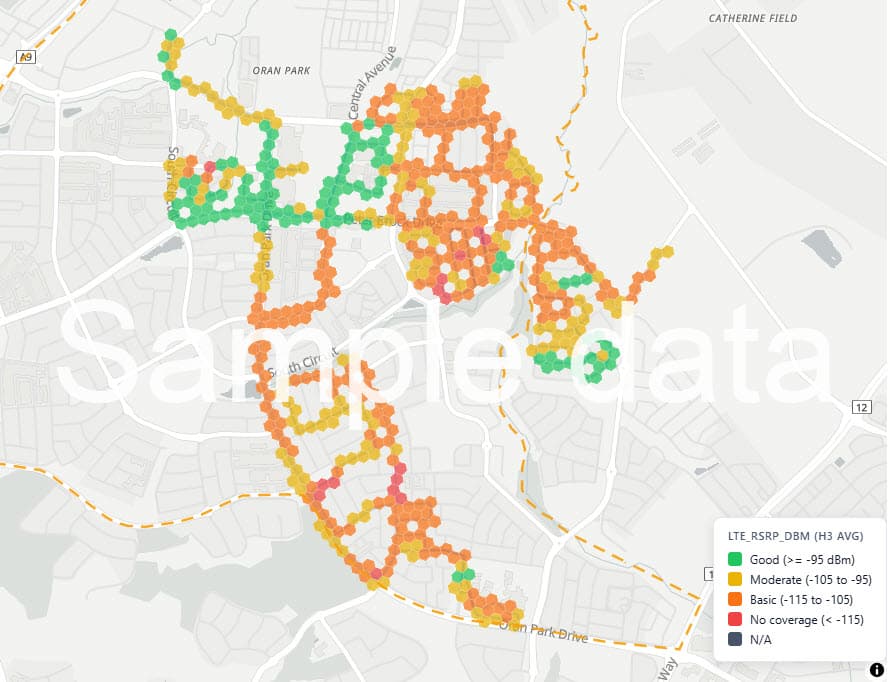
Example suburb-specific coverage assessment
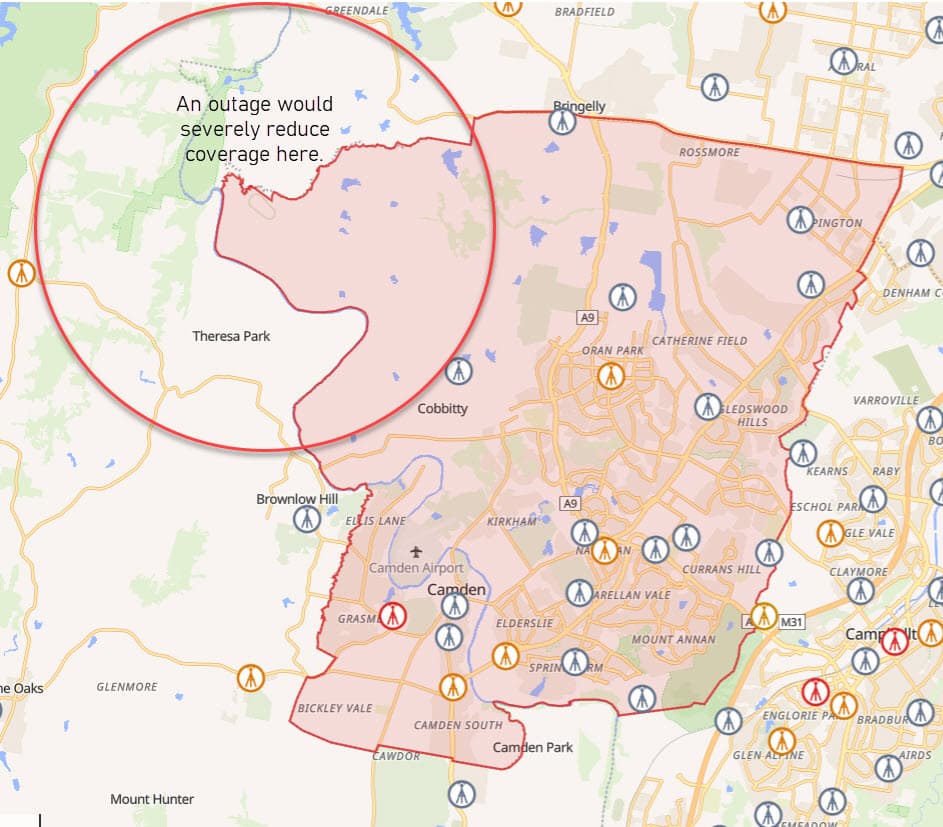
Example coverage risk assessment
Why councils engage Nettot
Nettot provides a more structured approach than anecdotal complaint-gathering, and a more practical and accessible option than commissioning a full-scale engineering measurement program. Council pilots are designed to be scoped, affordable, and relevant to local decision-making.
The result is evidence that councils can use with confidence in briefings, submissions, public discussions, and internal planning, without needing deep telecom expertise to interpret the findings.