
Methodology and Data Interpretation
A structured approach to generating and interpreting real-world telecom evidence.
Nettot's methodology is designed to support practical, interpretable assessment of mobile network conditions. Rather than collecting data without clear purpose, every measurement activity is guided by defined objectives, appropriate scope, and transparent interpretation practices.
This page outlines the principles, methods, and practices that underpin Nettot's approach to telecom intelligence.
Methodology principles
- Clear project scope: every assessment begins with defined objectives and boundaries
- Defined test context: measurement conditions, device types, and environmental factors are documented
- Structured collection methods: field activities follow repeatable protocols appropriate to the assessment type
- Transparent interpretation: findings distinguish between observed data and inferred conclusions
- Appropriate geospatial analysis: location-based patterns are analysed in context, not in isolation
- Explicit limitations: every output acknowledges what the data can and cannot support
Measurement modes
Nettot uses a range of measurement approaches depending on the assessment objectives, geography, and stakeholder requirements.
Drive testing
Assessment along selected road routes to evaluate coverage and service quality across corridors, transport links, and distributed areas.
Walk testing
Measurement within pedestrian-accessible areas, town centres, public spaces, and local activity centres.
Static-site testing
Fixed-location measurement at specific sites of interest such as public facilities, community buildings, or reported problem areas.
Guided field measurement
Structured measurement activities designed around specific project objectives, combining multiple approaches as needed.
Complaint-location follow-up
Targeted investigation of areas where coverage concerns or service complaints have been reported, providing evidence-based context.
Example comparative assessment
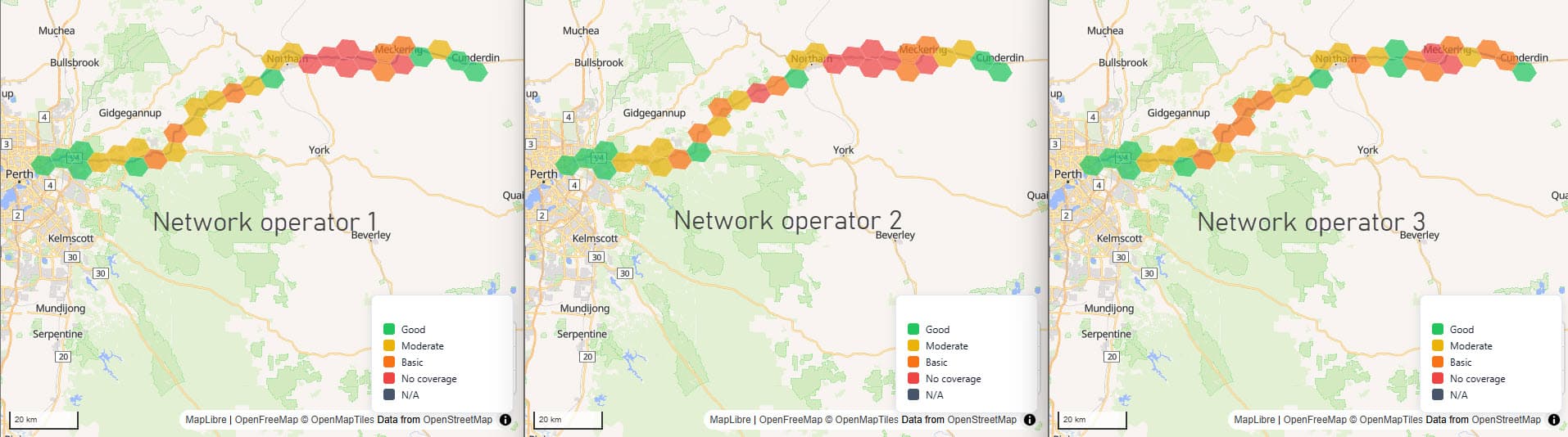
Example: identifying continuous no coverage zones
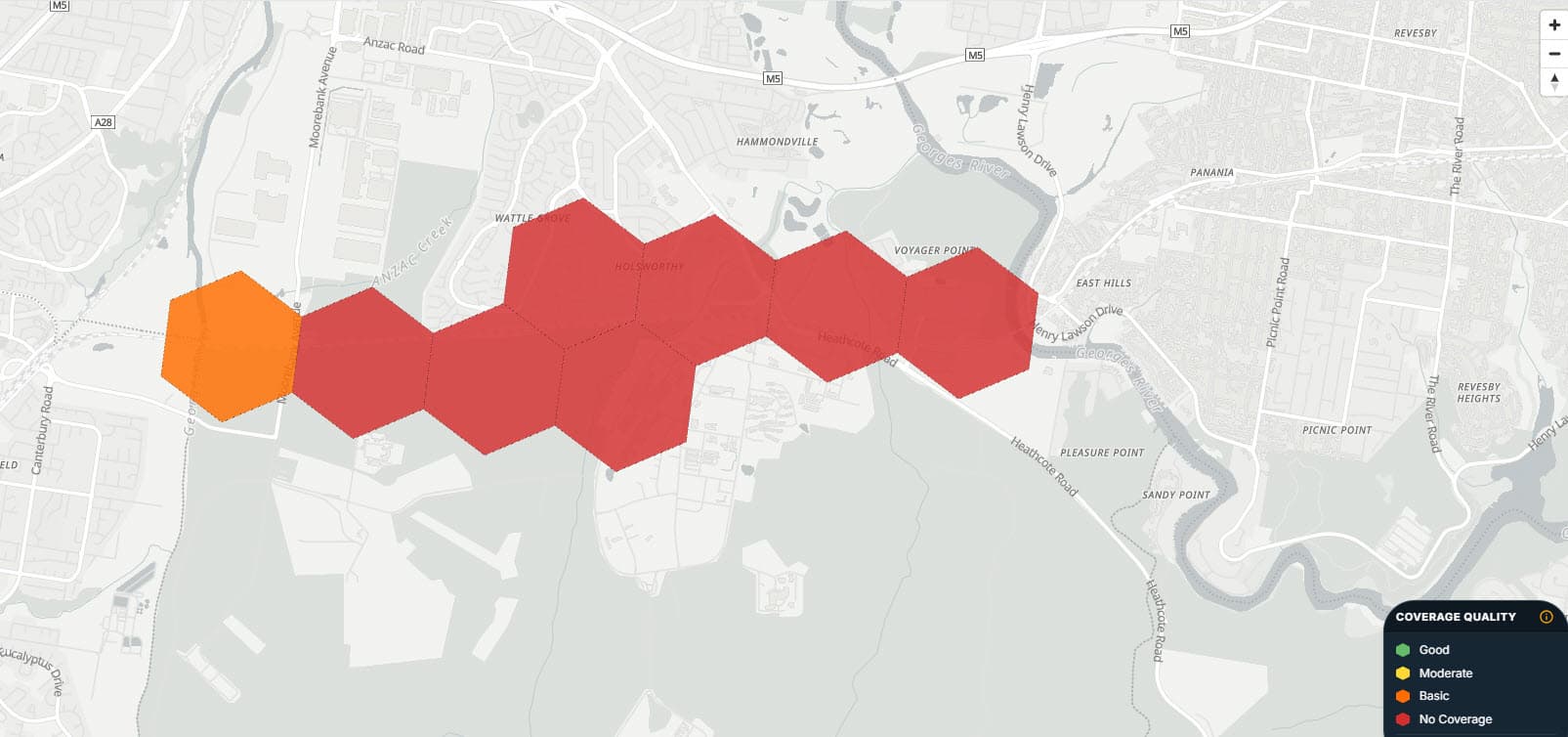
What may be assessed
- Signal conditions and coverage availability
- Access technology type (e.g. 4G, 5G) and network selection
- Download and upload performance
- Latency and responsiveness
- Route-level variation in service quality
- Location-specific inconsistency or degradation
- Comparative geographic patterns across areas or operators
Data sources and context
Nettot assessments may draw on a range of evidence sources to provide context and support interpretation. Depending on the project scope, these may include:
- Field measurements collected through structured test activities
- Community inputs gathered through guided surveys or stakeholder feedback
- Complaint and survey overlays to correlate reported experience with observed conditions
- Geospatial and demographic context to understand population, land use, and accessibility factors
- Infrastructure data where available, including tower locations and operator coverage claims
- Device capability context to account for handset and modem variations
- Environmental context such as terrain, building density, and seasonal factors
Not all projects will use all data sources. The scope of each engagement determines which sources are relevant and feasible.
Interpretation and reporting
Nettot places strong emphasis on separating observed data from interpretation. Raw measurements describe what was detected; interpretation explains what that may mean in context. Reports are structured to make this distinction clear, so that stakeholders can form their own views with full transparency.
Nettot reports typically describe:
- What was measured, including parameters, devices, and protocols used
- Where and under what scope the assessment was conducted
- Patterns observed in the data, including geographic, temporal, or operator-level trends
- Reasonable inferences that can be drawn from the evidence, stated with appropriate confidence
- Items that are out of scope or cannot be concluded from the available data
Limitations
Telecom measurement is subject to inherent limitations. Network conditions vary with time, load, device, location, environment, and operator configuration. A single measurement campaign provides a snapshot, not a definitive characterisation.
Nettot outputs should not be interpreted as definitive proof of coverage or service quality unless the assessment was specifically designed and scoped to support that level of conclusion. All findings are presented with stated scope, assumptions, and limitations so that stakeholders can use the evidence appropriately.
Why methodology matters
Credibility in telecom intelligence comes from collecting the right data, in the right context, using the right methods, and interpreting it transparently. Without methodological discipline, measurement data risks being misleading, misused, or dismissed.
Nettot's structured approach is designed to ensure that every assessment produces evidence that stakeholders can trust, reference, and act on with confidence.